
Guide 03 Vehicle history
How to Read a CARFAX Canada Report Before Buying a Used Car
One SUV has a reported repair. The other has a clean-looking report and a long gap between service entries. Here’s how to read both reports and ask better questions.

The quick answer
Start with the VIN and report date. Then read the accident, registration and service sections in order. “No Reported Accidents” means CARFAX Canada had no damage records for that VIN when the report was generated. Some events may never have reached its data sources.
- Identity
Does the VIN match, and when was the report generated?
- Events
What do the damage, registration and odometer entries say?
- Follow-up
What can the dealer document or the mechanic verify?
What CARFAX Canada is and who issues it
A Vehicle History Report (VHR) is a snapshot of records associated with a vehicle identification number (VIN). CARFAX Canada, the private company formerly called CarProof and now part of Mobility Global, compiles and issues it. A dealer or private seller can buy and share it. Canadian and U.S. registration agencies, insurers, repair facilities, auctions and police are among the sources that supply records. Manitoba Public Insurance (MPI) is where you check Manitoba registration and insurance requirements. About CARFAX Canada · Where the records come from.
Think of the report as a list of leads to follow. Repairs paid out of pocket, work done at home or a recent incident can be missing. Even older records can arrive after the report was generated. Read it alongside the seller’s written disclosures, the Manitoba Certificate of Inspection (COI) and an independent pre-purchase inspection.
Walk through a sample report
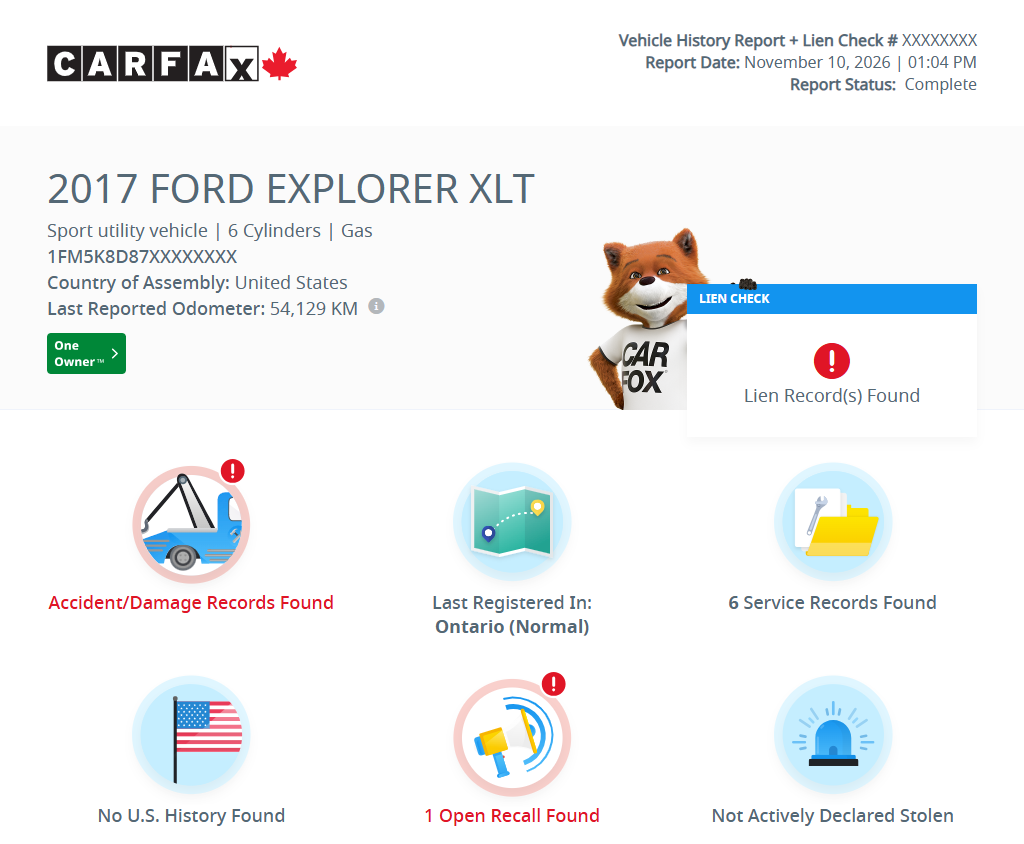
Explore CARFAX Canada’s sample for a 2017 Ford Explorer. The numbered areas show where to look in the report and what each result means for a buyer.
Section 1 of 9
Vehicle & VIN
Start with the 2017 Ford Explorer XLT, the VIN and the report date above. The sample masks the VIN and report number. For a vehicle you’re buying, ask to see the full VIN and match all 17 characters to the car and its paperwork. The 54,129 km reading is the latest in the report, so compare it with the dash.
Verify a reportSection 2 of 9
Lien check
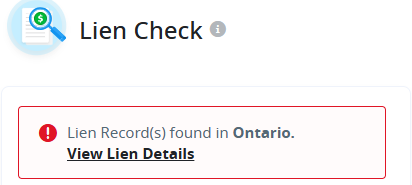
The summary flags a lien. The detailed section identifies Ontario and links to the registration details. A lien can secure someone else’s loan against the vehicle. Before paying, verify the lender’s discharge with a fresh search.
Check liens in ManitobaSection 3 of 9
Accident / damage
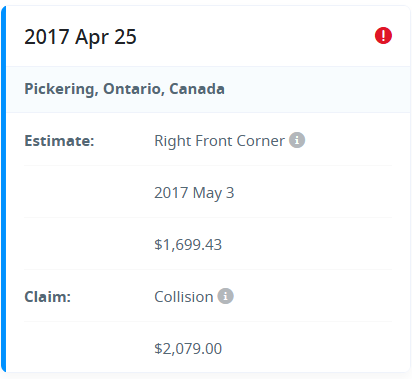
Read the date, location and source together. This entry shows a right-front estimate of $1,699.43 and a $2,079.00 collision claim grouped under the same date. Ask for the final repair invoice and have a mechanic check the affected area. Keep the estimate and claim amounts separate.
Read the damage termsSection 4 of 9
Registration
Ontario (Normal) is the registration status shown here. Notice that the same report lists collision damage and a lien. Check earlier brands and, for a Manitoba vehicle, compare the current status with the Transfer of Ownership Document.
Read the registration termsSection 5 of 9
Service records
Six entries are on file. Open the service section to see what each visit was for. In this sample the entries include detailing and a wheel alignment. Ask for invoices and compare the actual work with the maintenance schedule.
Check service and mileageSection 6 of 9
U.S. history
The vehicle was assembled in the U.S. and the report found no U.S. history. Assembly location is separate from registration history. If a report shows U.S. registration or import/export activity, check the units on the odometer entries and ask for the applicable import paperwork.
Check cross-border historySection 7 of 9
Open recalls
The report lists one open Ford campaign, 19S29. Use the VIN to ask the manufacturer or an authorized dealer whether the campaign still applies and whether the repair has been done.
Verify a recallSection 8 of 9
Stolen check
The search returned no active stolen flag. Still match the VIN on the vehicle to the report and paperwork. If an active flag appears on a vehicle you’re considering, stop the purchase and contact local police to verify it.
Read the theft checkSection 9 of 9
Detailed history
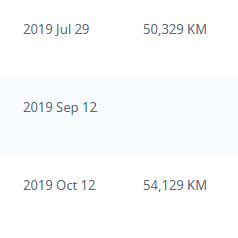
In the timeline, 50,329 km in July 2019 rises to 54,129 km that October. The recall entry between them has no odometer reading. If an ad showed less than 54,129 km today, ask for a documented explanation before paying.
Follow the odometer entriesScreenshots from CARFAX Canada’s sample. Open the complete sample report.
How to verify the report before you pay
- Get the full report. Ask for a complete copy and, if available, the original hosted link. Check that the address is on a genuine CARFAX Canada domain, such as vhr.carfax.ca. A PDF can be legitimate. A screenshot or a report badge leaves you without the detail needed to verify it.
- Match all 17 VIN characters on a modern vehicle. Compare the report to the dash plate at the base of the windshield, the driver’s door label and the paperwork. Check year, make and model, too. A listing may hide the VIN. Ask to see the full version in person. A mismatch or a VIN plate that appears altered is a reason to pause before leaving a deposit.
- Check the report number and date. For a PDF you can’t verify online, submit the VIN and report number to CARFAX Canada Support via Contact Us and ask them to confirm the pair. CARFAX Canada says its reports are valid for 180 days from purchase. A working link still reflects the report’s generation date. Ask for a fresh report if the copy predates a recent incident, transfer or lien release. You can also order directly from CARFAX Canada using the verified VIN. How CARFAX Canada verifies a report · Report expiry.
- Confirm the coverage. Find the actual lien search result if you need to establish whether there’s money owing. Look for missing pages, cropped headings or unexplained differences between copies. Ask for supporting records if an entry looks wrong.
Accidents and damage: read the type, date and location
Find the incident date, province or state, part of the vehicle affected and the source of the record. Use those details to match estimates, claims and repairs that may describe the same event. Keep each amount separate.
- Police reported accident / Damage event
- A police record or another source reported an incident. You may get a damage location or severity description with no dollar figure. Ask what was damaged and what was repaired.
- Estimate / Estimate repair
- A repair cost estimate. Get the itemized final invoice or repair order to see the actual parts and work.
- Insurance claim
- The insurer’s record. A listed amount may reflect a payout or recovery and can differ from the estimate. A blank or $0 claim can mean the amount wasn’t supplied or the claim hadn’t settled. Investigate the underlying incident.
- Repair record
- Reported work. Match the VIN, date and repair area to the invoice. For a bumper with sensors, ask what was replaced and whether any required calibration was done.
- Collision / Comprehensive / Glass
- Collision describes impact. Comprehensive can include hail, vandalism or theft-related damage. A documented chip repair or windshield replacement can be routine. Check for leaks and whether any required camera calibration was documented.
- Total loss / Write-off
- An insurer deemed the vehicle a total loss, which can be an economic decision. Check the official registration brand and why it was written off. A hail write-off and a severe structural collision call for different evidence.
What matters more than the dollar figure? Airbag deployment, frame or unibody damage, fire and flooding deserve particular scrutiny. Pause until you have documentation and a specialist’s assessment. Ask a collision shop to check the areas the record points to. Uneven panel gaps, paint overspray, moisture under the spare tire or uneven tire wear can guide the inspection. Each clue can have more than one explanation.
“No Reported Accidents” tells you what CARFAX Canada had on file when it generated the report. If the ad says “no accidents” and the report lists an impact, ask the seller to reconcile it in writing before you make the trip. Manitoba dealers must make specified disclosures before the contract and include them in the contract, based on what they know or ought to know. That includes damage from an incident when repair costs exceeded $3,000, along with other prescribed history such as flooding, write-off and prior registration outside Manitoba. Use the repair cost and the underlying facts when asking about disclosure. Manitoba Consumer Protection Office · Estimate vs. claim.
Registration, ownership and import history
A brand is a status recorded by a registration authority. Check the latest brand and look back for earlier ones, especially after a province or country change. In Manitoba, compare the report with the seller’s TOD and ask an Autopac agent about any uncertainty before you pay.
- Normal / “Clean title”
- Normal is a recorded brand. “Clean title” is often the seller’s shorthand. A Normal entry can coexist with prior damage, mechanical problems or a lien. Check those separately.
- Inspection Required
- The registering jurisdiction flagged an inspection requirement. Ask what triggered it, which inspection is needed and whether the requirement has been cleared.
- Salvage / Salvageable
- Pause and verify what’s required to register it. Manitoba generally requires a Body Integrity Inspection Certificate (BIIC) and a COI after repair. MPI describes a cosmetic exception that still requires a COI.
- Rebuilt
- Previously salvageable and subsequently approved for road use after the required process. Ask for repair records and inspection certificates. Confirm registration and insurance with Autopac and get an independent assessment of the repair.
- Irreparable / Non-repairable
- For a road-going purchase, stop here. Manitoba does not allow vehicles branded Irreparable to be registered for public roads.
- First owner / New owner / Renewal
- Owner entries reflect reported registration history. A renewal or a move by itself is weak evidence of another owner. Check the sequence and ask about several quick changes. Look for recorded rental, commercial or fleet use and ask how the vehicle was used and maintained.
U.S. History and out-of-province records. A move can be routine. Look for a different earlier brand, odometer readings in miles and gaps around the transfer. A Storm Area entry points to a vehicle registered in an affected area. A Flood brand indicates reported water damage. For a U.S. import, ask for the applicable import paperwork and confirm Manitoba registration requirements. The Canadian lien search does not cover U.S. liens. MPI’s used-vehicle checks · Manitoba salvage statuses · CARFAX Canada registration terms.
Mileage and maintenance: follow the timeline
Last reported odometer is the most recent reading supplied to CARFAX Canada. Write down the date, reading and units for each available entry and compare them with the dash. For an import, 60,000 mi is about 96,600 km. A lower later reading may be a unit or entry error, a documented instrument-cluster replacement or possible rollback. Ask for dated shop invoices or cluster paperwork. Pause if the discrepancy remains unexplained.
Vehicle serviced can cover anything from detailing to substantial repairs. Read the line items. Oil changes, tire rotations and brake replacements are often routine. A long reporting gap may reflect DIY service or a shop that doesn’t submit records. Ask for dated receipts and compare them against the manufacturer’s schedule. Frequent visits for the same symptom deserve a diagnosis and an invoice showing what fixed it.
Use a mechanic’s written estimate for work due now or soon. An older commuter with more kilometres and documented maintenance can cost less over its first year than a lower-kilometre car that immediately needs brakes, tires and catch-up service.
Liens, recalls and stolen-vehicle checks
- Canadian Lien Check. A lien is a legal interest in the vehicle, often securing a loan. If the report says a lien was found, pause payment, confirm the status with the secured lender and verify the discharge with a fresh search before you buy. “No liens found” applies to the search as run. CARFAX Canada checks eligible Canadian jurisdictions where it finds current or past registration, excluding the Northwest Territories. If no search was included, arrange one separately, particularly for a private sale. Teranet operates Manitoba’s Personal Property Registry. CARFAX Canada lien search coverage · Manitoba Personal Property Registry.
- Open Recall. A safety campaign is listed as outstanding. Ask the manufacturer or an authorized dealer to check the VIN and confirm the remedy and timing. Ask the seller to arrange the repair before pickup and follow any manufacturer instructions about driving or parking. Even with “None reported,” check the current VIN result. Transport Canada recall guidance.
- Stolen Vehicle Check. An active stolen flag means stop the purchase and contact local police to verify. A historical theft or recovery entry calls for proof the status was cleared and an inspection for damage to locks, ignition, wiring or other areas affected by the theft. Canadian Police Information Centre public VIN search.
Spot an omission or find an overlooked good buy
Worth a closer look
Consider a different SUV with a documented bumper-only repair and an independent inspection that confirms the rear structure and sensors are sound. Say it costs $16,000 with tax and needs $900 in tires. At $16,900, it’s still $900 below a comparable $17,800 SUV with usable tires, assuming similar condition and other costs.
Pause and verify
Suppose another SUV looks clean on paper, but the ad says 92,000 km and an older service entry already shows 107,300 km. Ask for dated invoices, a photo of the odometer and an explanation of any unit change. If the seller can’t account for the discrepancy or won’t allow an independent inspection, move on.
- Family SUV: For a rear impact, ask the shop to inspect the cargo floor, rear structure, liftgate and sensors. For winter use, check the tires and underbody in person.
- Budget commuter: Compare the purchase total plus near-term work. A windshield replacement or routine brake job with an invoice may be less consequential than an unresolved transmission complaint.
- Work pickup: If past fleet use or heavy towing is possible, ask about duty and maintenance and have the hitch, frame and drivetrain inspected. Confirm payload and towing ratings for the exact configuration.
- First purchase in Manitoba: Bring the VIN, TOD and safety paperwork questions to an Autopac agent and confirm what you’ll need to register and insure the vehicle.
Ready to compare vehicles?
Check the listing for a history report, or ask the dealer if one is available for the VIN.
Browse used vehicles