
Guide 06 Tires and winter driving
Winter Tires in Winnipeg: What to Buy and How MPI Financing Works
It’s 7 a.m., the street looks clear, and the stop sign at the end of the block is sitting on a patch of ice. What’s on your wheels matters. Here’s how to read the tire labels, choose a set for your route and spread the cost through Manitoba Public Insurance (MPI).
The quick answer
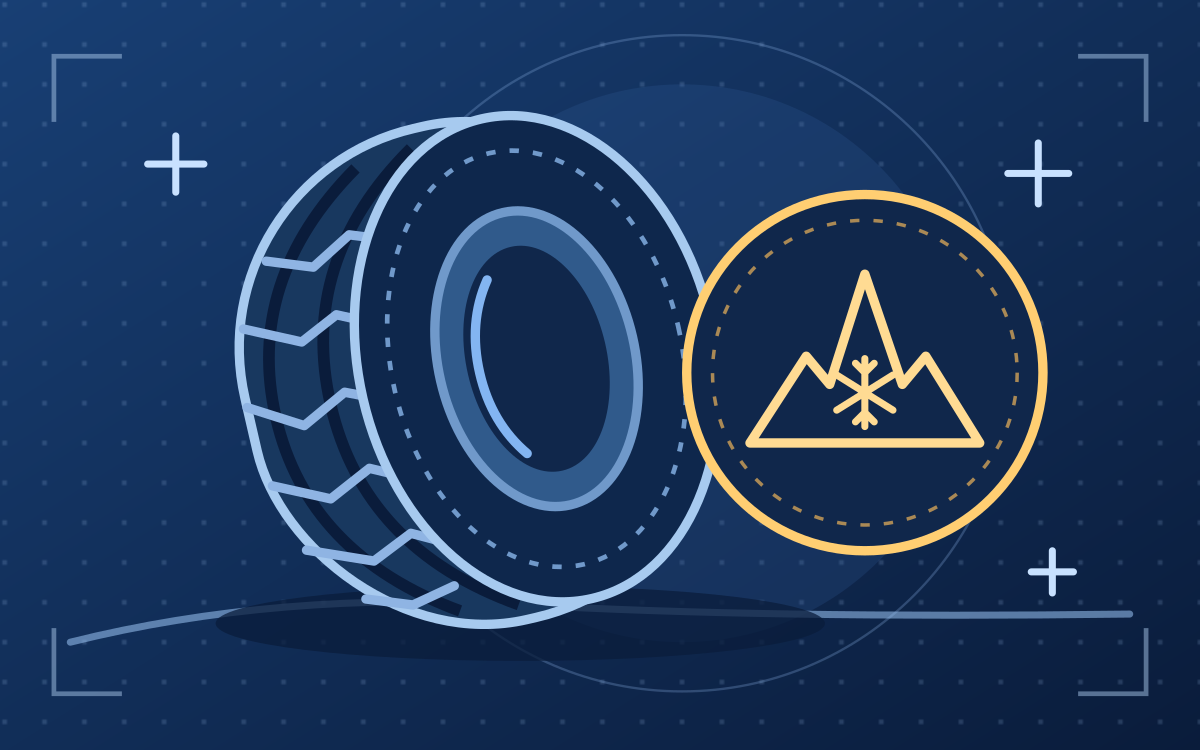
For a typical Winnipeg winter, start with four matching dedicated winter tires marked with the three-peak mountain snowflake (3PMSF). Studless is a good default for city driving. Book the swap when temperatures are staying below 7°C. Eligible MPI customers can finance up to $2,000 per vehicle over one to four years; all-weather tires no longer qualify, even with the snowflake.
- Choose four
Dedicated winter tires on all four wheels, even if you drive an AWD SUV.
- Watch for 7°C
Book your swap when temperatures start staying below 7°C.
- Check MPI eligibility
Ask a participating shop to confirm the exact model and size before you buy.
Four tire types, four different jobs
The trickiest labels are all-season and all-weather. They sound interchangeable at the counter, but they describe different approaches to winter. Here’s what each type is built for and when it makes sense in Winnipeg.
- Summer
- Warm monthsBuilt for grip and handling on warm dry or wet pavement. A summer set can make sense if you want crisp steering and already own winters. Swap it out before regular cold weather; the rubber loses flexibility as temperatures fall.
- All-season
- Spring, summer and fallA practical everyday set for dry roads and rain in milder temperatures. Many carry M+S, short for mud and snow. That marking alone does not show the tire passed the severe-snow traction test. In Winnipeg, think of these as the set you take off before winter.
- All-weather
- Year-round compromiseLook for the mountain-and-snowflake mark on the exact tire. It shows the tire meets a snow traction standard. A single set can make sense if you drive mostly on cleared roads and can stay home in bad weather. For frequent ice and deep cold, choose dedicated winters.
- Dedicated winter
- Sustained cold, snow and iceCold-weather rubber stays flexible at lower temperatures. Small cuts in the tread, called sipes, create more gripping edges. This is the best starting point for a Winnipeg winter. Switch back when the weather warms; winter rubber wears faster on warm pavement.
Shopping for a pickup? All-terrain describes a tire’s intended use on and off pavement. Some models carry the mountain snowflake, but the words “all-terrain” by themselves tell you little about grip on a glazed intersection. If MPI financing matters, ask how the manufacturer classifies the specific tire.
What works best for your Winnipeg winter?
City commute and school runs: start with studless winters
A plowed route can still have polished snow at stop signs, slush between lanes and ice where meltwater refroze overnight. Four matching studless winter tires are our starting recommendation for that mix. They give you a cold-weather setup without the extra pavement noise of metal studs. This matters even on a short trip: the last few metres at a slick intersection are where you need the grip.
Regular trips on icy rural roads: ask about studs
Metal studs can help on hard ice. If you regularly drive before roads are treated or deal with a long, icy rural approach, ask a shop to compare studded and studless options in your size. Studs add noise on bare roads, and the extra grip on ice comes with trade-offs on bare pavement. Manitoba’s regulation permits qualifying studs from October 1 through April 30. Plan the spring swap before that window closes.
One set and nowhere to store another?
A 3PMSF all-weather set is the option to compare if you drive mostly on cleared streets and can postpone trips during the worst weather. Think about the trips you can’t move: a hospital shift before sunrise, a weekly drive out of town or a steep back lane you have to use daily. If those trips put you on ice or packed snow often, budget for dedicated winters and ask the shop what it charges to store the other set.
AWD helps you get moving. Your tires still have to grip the road when you steer or brake. Whether you drive a front-wheel-drive hatchback or an AWD SUV, run four matching winter tires and give yourself more stopping room on slippery roads.
What does MPI recommend?
MPI recommends dedicated winter tires and advises installing them when temperatures stay below +7°C. That’s a reason to book ahead when the forecast turns colder, even if the streets are still dry. Ask the shop to show you the 3PMSF mark and confirm the manufacturer lists that model as a winter tire. MPI’s guidance describes the type to buy; it doesn’t rank tire brands.
Transport Canada recommends installing winter tires in sets of four. Match the tires to your vehicle’s approved size, load index and speed rating, and follow any vehicle-specific requirements. Two grippy tires and two with less winter grip can make the vehicle behave unpredictably when you brake or turn. Even with a good set, MPI advises driving to conditions: slow down, brake smoothly, leave a bigger gap and consider delaying the trip when roads are poor.
How MPI’s Winter Tire Program works
The program is a loan with interest. Eligible customers can finance up to $2,000 CAD per vehicle at prime plus 2 percentage points over one to four years. Payments come out of your bank account monthly. Ask the retailer for the rate that applies, the amount you’ll pay each month and the total you’ll repay. The rate MPI quotes can change.
Who can apply? Individual MPI customers with a passenger vehicle or light truck registered in their own name and no overdue MPI payments or financing restrictions. Check your eligibility with MPI before visiting a shop.
Which tires qualify? Since October 1, 2026, tires must have the 3PMSF mark and be designed and marketed only for winter. Tires sold as all-weather, all-season, four-season or year-round don’t qualify, even if the sidewall has a mountain snowflake.
What else can you include? Eligible costs can include rims, mounting, balancing, alignment, tire pressure monitoring equipment, studding within program limits, and applicable taxes and fees. Storage and seasonal swaps can qualify if included in the original purchase. Tire repairs and later standalone swaps are excluded. Ask the retailer to itemize the eligible charges so you can see what fits under the cap.
- Get a quote
Use MPI’s Find a Service tool to locate a participating tire shop. Ask for the installed price of four eligible tires.
- Bring your documents
Bring your driver’s licence and vehicle registration. The shop checks your eligibility and confirms the tires qualify.
- Review and set up the loan
Choose the term and confirm the amount, rate and monthly withdrawals with the retailer before signing.
What a longer term changes: On a hypothetical $1,500 loan at a fixed 6% with no fees, 24 months would be about $66.48 per month ($1,595.54 total), versus $35.23 per month ($1,690.92 total) over 48 months. This is a math example, not an MPI rate or quote. A smaller monthly bill can cost more overall. See the official program terms and MPI’s Find a Service tool.
What to check before you buy
- Start with the driver’s door label and owner’s manual. Confirm the correct size and pressure, and ask the shop to verify load and speed ratings. If you want smaller winter rims, have it check approved sizes and brake clearance first.
- Compare installed prices for four tires. Get the tire model and size in writing. Ask whether the quote includes rims, mounting, balancing, sensors, taxes and storage. Compare the same items across shops.
- Inspect the extra set on a used vehicle. Ask for tread depth on each tire, photos of the sidewalls and the manufacturing date code. A set that comes with the car is useful only if it fits, is in good condition and has enough tread for snow. Transport Canada advises against using tires near 4 mm (5/32 in.) on snow-covered roads.
- Check pressure when the tires are cold. Use the vehicle’s recommended cold pressure. A big temperature drop can lower tire pressure, so check after cold snaps and before a long highway trip.
How to compare two quotes at the counter
One quote may look cheaper because it covers tires alone. Another might include mounting on a second set of rims, balancing and sensors. Ask both shops to price the same setup, then compare what you’ll pay each spring and fall. Keeping each set on its own rims means buying wheels up front, but it can simplify later swaps. Ask what each shop charges to swap complete wheels versus moving tires onto the same rims.
How to read the age of a used set
The four-digit date code gives the week and year the tire was made: 3523 means the 35th week of 2023. Check all four because they may have been replaced at different times. Tread depth alone can miss problems. Look for uneven wear, cracks or bulges, and let a tire shop assess a used set before relying on it for a winter commute.
Ready to compare vehicles?
If the vehicle comes with a second set, ask for the tire model, sidewall markings and tread depth before you count it in your budget.
Browse used vehiclesSources and further reading
- MPI · Winter Tire Program terms and eligible purchases
- MPI · Dedicated winter tire recommendation and October 2026 eligibility change
- MPI · Winter driving advice
- Transport Canada · Winter tire markings, installation and care
- Transport Canada · Tire size and sidewall codes
- Manitoba · Studded tire rules (section 3.21)
- Michelin Canada · Tire types and their uses
- Michelin Canada · Studded and studless winter tire options