
Guide 12 Your first used car
How to Buy Your First Car in Winnipeg as a Newcomer
A step-by-step guide to buying a used car in Winnipeg, from your first budget to your first drive.
The quick answer
Start with what you can afford for the whole first year. A $15,000 used car from a Manitoba dealer comes to $16,800 with GST and RST, before insurance, registration and running costs. Confirm you can drive on your licence, ask for the itemized price, CARFAX and safety certificate, then compare cash and loan offers. Once you buy, register and insure the car with an Autopac agent before driving it home.
- Set your limit
Include taxes, Autopac, fuel, tires and repairs.
- Check the car and the offer
Match the VIN, read the paperwork and compare the total cost.
- Register and insure
Take the signed purchase documents to an Autopac agent.
1. Set a first-year budget
Set two limits before you shop: how much you can spend up front and how much you can afford each month. Leave room for unexpected repairs and other settling-in costs.
- Purchase price and taxes. For a typical dealer purchase in Manitoba, budget 5% federal GST and 7% Manitoba retail sales tax (RST, also called PST). Ask for the advertised price, taxes and any optional products in writing. Manitoba requires dealer ads to include mandatory charges in the advertised price. Canada Revenue Agency tax rates · Manitoba dealer pricing rules
- Insurance and registration. Ask an Autopac agent for a quote for the exact vehicle and how you’ll use it. If you drove abroad, ask what proof of your driving record the agent can accept. MPI Insurance Rate Calculator
- Fuel, maintenance and winter tires. Estimate fuel from your commute. Ask a mechanic which services are due this year, price a winter set if needed and keep a repair reserve.
Worked budget in CAD. A $15,000 dealer price plus $750 GST and $1,050 RST comes to $16,800. If your own estimates for insurance, registration, fuel, service, tires and a repair reserve add up to $4,000, plan for $20,800 in year one if you pay cash. Replace the $4,000 allowance with your own quotes. If you borrow, your first-year cash outlay is your down payment plus your first year of loan payments and running costs.
Buying privately? An Autopac agent collects RST at registration. For most private passenger-car purchases, Manitoba uses the higher of the purchase price and the average wholesale value. Ask for an estimate before treating the listing price as a bargain. Manitoba Finance’s private-sale bulletin
2. Prepare your licence, ID and proof of address
- Driver’s licence. Bring your original, valid licence to the test drive and ask the dealer whether it accepts your current licence. Manitoba Public Insurance (MPI) generally allows new residents to drive for up to three months on a valid equivalent licence. The issuing jurisdiction and your status affect exchange, testing and translation requirements. Confirm your eligibility and deadline with MPI. MPI’s rules for newcomers
- Photo ID and proof of address. Ask the dealer and lender what they accept before you visit. Bring a valid government-issued photo ID, such as your passport if accepted, and a recent document showing your name and Winnipeg address, such as a utility bill from your provider. A lender may also ask for income or employment documents. Use the lender’s secure process to share them.
- If you’re applying for a Manitoba licence or ID. MPI checks your identity, Manitoba residence and entitlement to be in Canada. Use its list to choose the originals to bring, such as a passport and applicable immigration document. MPI requires two supporting documents for Manitoba residence, dated within 90 days of your application. Check that the name, address and dates match your application. MPI’s accepted identity and address documents
3. Shortlist cars that fit your daily route
If you drive across Winnipeg for early shifts, compare a compact car with good winter tires against the cheapest SUV you find. Ask which tires are included, what their tread and age are and when the next service is due. If you need to carry children, bring your child seat and check fit and cargo space at the visit.
Compare similar year, trim, kilometres and condition. Ask for the full 17-character vehicle identification number (VIN), a written price with taxes, a full history report and the safety inspection certificate before travelling to see the car.
4. Read the CARFAX and verify the safety certificate
CARFAX Canada compiles a Vehicle History Report from records available to it when the report is generated. Ask for the full report on CARFAX Canada’s site or order one yourself by VIN. Match all 17 characters to the dashboard and the sale paperwork, check the report date and look for the + Lien Check heading. Order a fresh search if the report is old or the lien section is missing. CARFAX Canada’s report types
- Confirm the history. Check damage dates, registration status, mileage and service entries. Gaps can reflect missing records. Ask for service and repair invoices and have a mechanic examine any reported damage. Investigate a mileage drop or an unexplained VIN mismatch before committing.
- Pause for a lien. A lien is a legal claim against the car, often securing someone else’s loan. Ask for the lender’s discharge and verify it with a fresh lien search before paying. MPI’s vehicle buying checks
- Check the Certificate of Inspection (COI). An inspector at an approved station signs it after the car meets minimum safety standards for items such as brakes, tires and steering. Check the VIN, date and any advisements, then verify the station through MPI’s directory. MPI says the COI is valid for one year for ownership transfers. Ask an Autopac agent to confirm a questionable certificate before paying. Have an independent mechanic assess the engine, transmission and upcoming repairs. MPI’s certificate and station directory
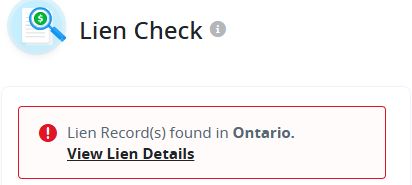
The sample lists a collision claim and an Ontario lien even though the registration status reads “Normal.” For a car you’re considering, ask for the final repair invoice, have a mechanic inspect the affected area and verify that any lien has been discharged. Open the official sample report
5. Compare paying cash, a bank loan and dealer financing
Start with the same itemized purchase price. Ask each lender to quote the same down payment and term first, then compare other terms if needed. Confirm whether the quote includes any optional warranty or loan insurance.
What to compare. The down payment is what you pay up front. The amount financed is what you borrow. The term is how long you’ll repay it. The annual percentage rate (APR) expresses the borrowing cost as a yearly rate. Ask for the APR, the payment amount and frequency, all fees, and the total paid over the loan. To compare monthly budgets, multiply a biweekly payment by 26 and divide by 12.
Official example. In the Financial Consumer Agency of Canada’s example, borrowing $25,000 at 5% for 36 months costs $26,974 in total. Over 84 months, it costs $29,681. That’s $2,707 more for the lower payment. If your budget only works with the longer term, compare a cheaper car using the same running-cost assumptions. FCAC’s financing comparison
6. Test drive, sign and register before driving home
Test drive the actual car on roads like the ones you use daily, then get an independent inspection. Ask for the repair findings and a written estimate. Pause if the seller refuses the inspection, the paperwork VIN differs from the car or the final price changes without a clear explanation.
Read the final agreement before paying. The buyer and seller sign the bill of sale, which records the vehicle, VIN, price, date and both parties. Check it against your written quote and have any promised work or included tires added to the contract. The seller provides the signed Transfer of Ownership Document (TOD), normally part of the Manitoba registration card. Check the VIN, seller details, vehicle status and signature. Ask an Autopac agent about any mismatch or unusual ownership paperwork. MPI’s ownership transfer guidance
Take your licence and the signed bill of sale, signed TOD and valid COI to an Autopac agent. Ask the agent to confirm what they need for your situation and when your registration and insurance take effect. MPI’s used-vehicle registration requirements
Checklist for your first car purchase
Compare cars within your budget
Use the estimator to compare loan terms, then check prices and vehicle details in the inventory.